
Working glass for the working class.
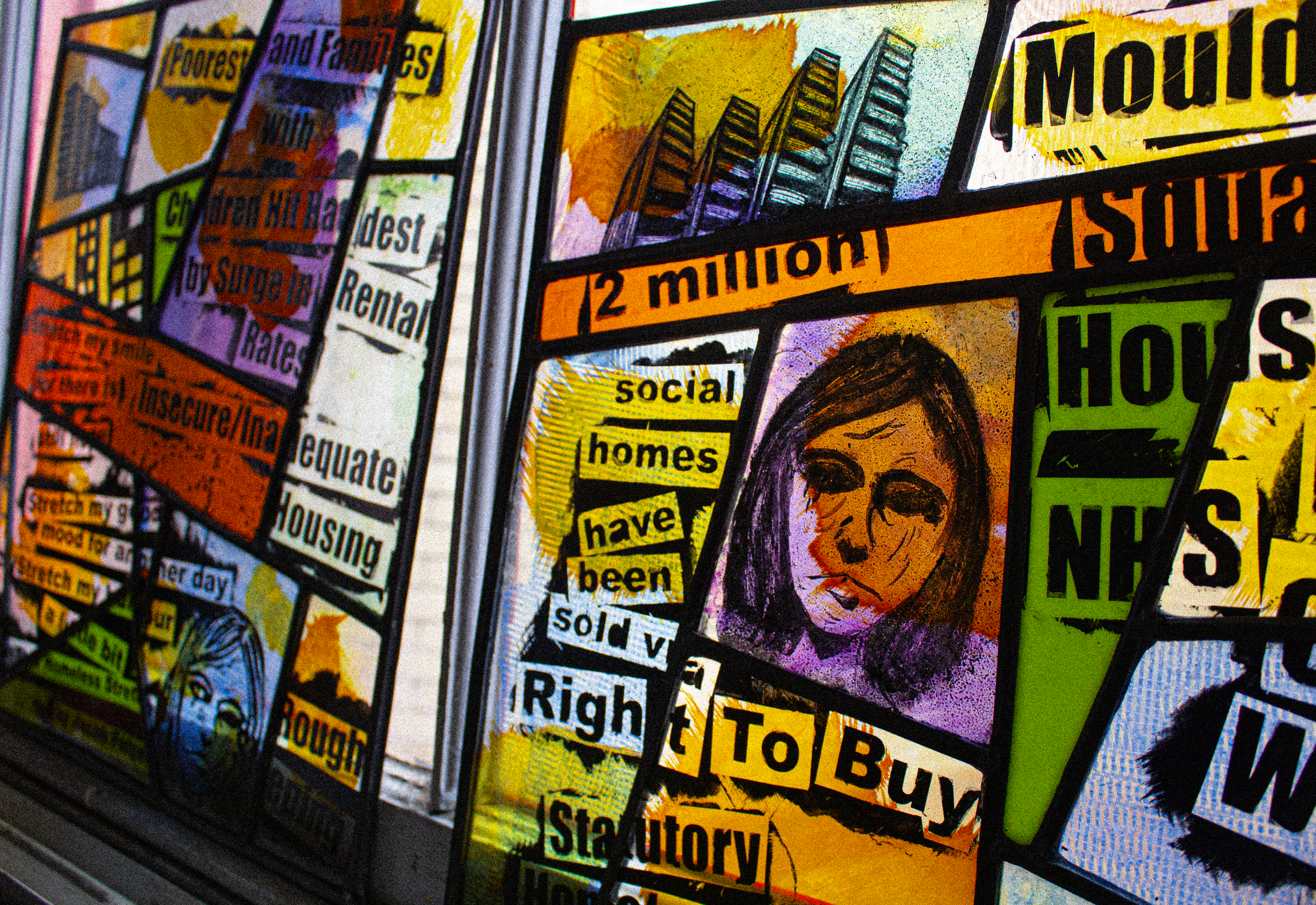
Artwork by Keira McLean
In a DOPE Magazine first, our cover design for Issue 34 is a stained-glass piece. We sat down with Keira McLean in her Glasgow workshop to discuss the artwork and her work.
Could you explain a bit more about the concept behind the cover design for this issue of DOPE Magazine?
So there are a couple of things interacting. I’m a member of Living Rent, which is a tenants’ union. One of the things we've been seeing is a rise in evictions, and that obviously exacerbates the homelessness crisis. I'm also going through that process myself, as I was evicted. I've been waiting seven months for a homeless caseworker. And it was reading about the stats, thinking about my situation, feeling quite despondent and realising there are so many different types of homelessness, besides just rough sleeping. So, it was about making the link between the homelessness crisis, the housing crisis, and that this isn't just the problem of the person who’s going through it, it’s everybody's problem. For instance, it's putting pressure on vital services, such as the NHS. So, it was really to explore this idea that this issue affects everybody. These crises aren’t happening in isolation. We have to look at the bigger picture of why young people can't get homes, why there is a growing homeless population. Why we’re in the middle of a cost-of-living crisis. All of these things are because of political will. It’s all connected. And we are also part of the solution to try to fix all of this.
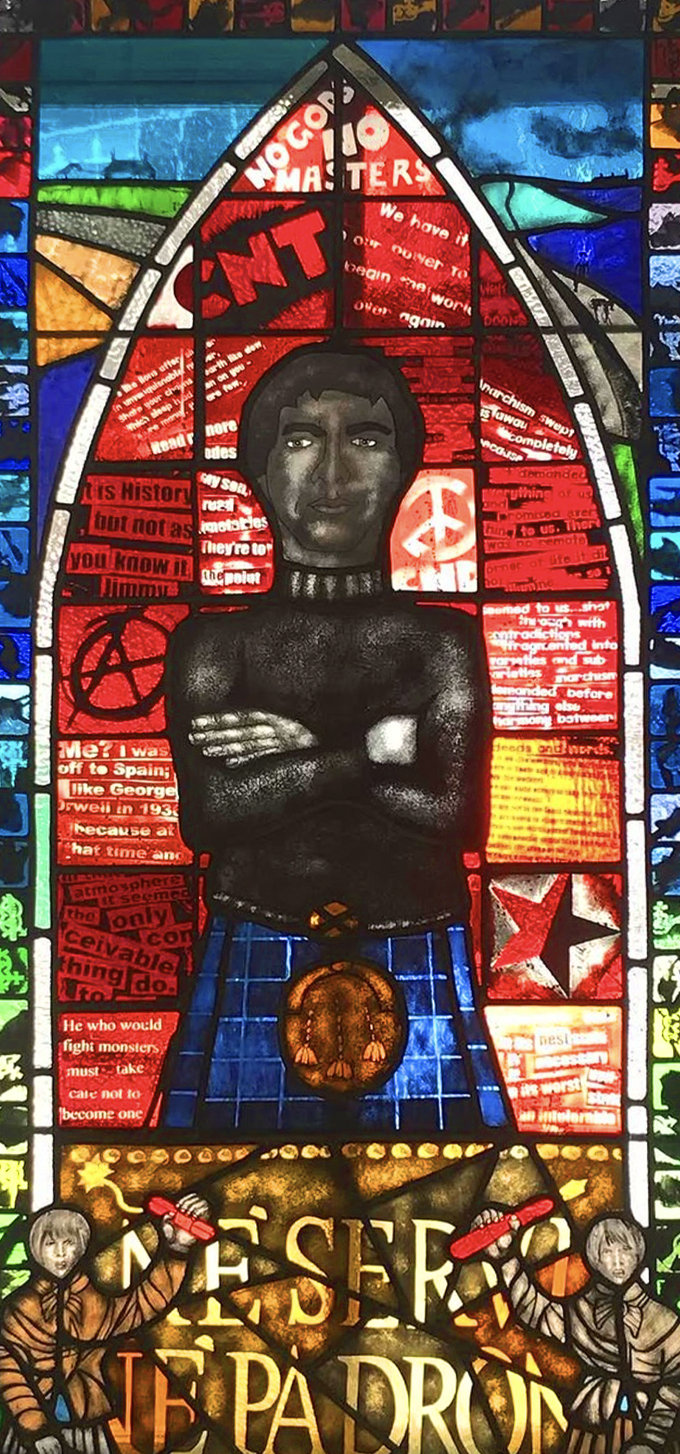
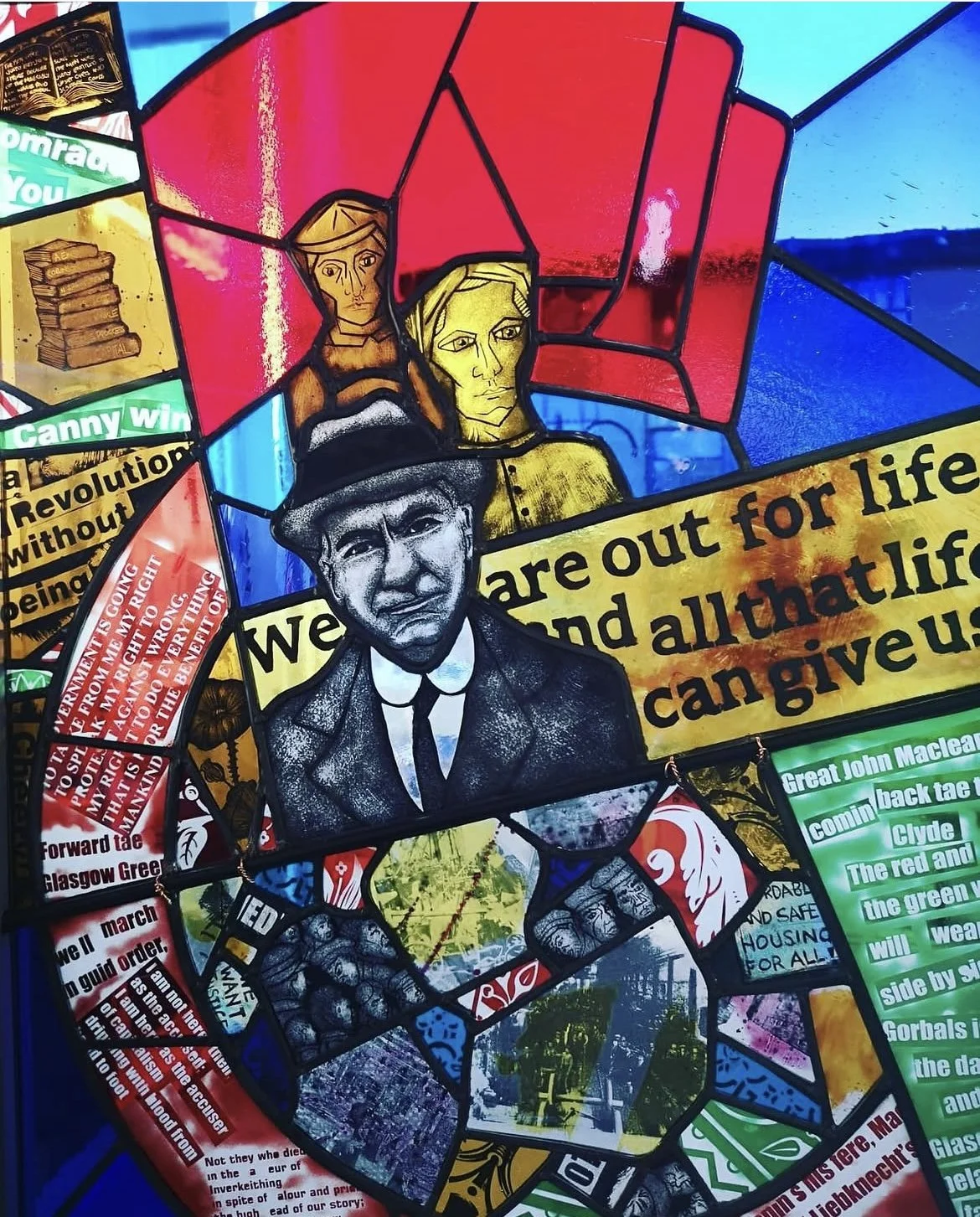
You’ve made stained glass about all kinds of different people from working class history, like Stuart Christie, the Glaswegian anarchist. Could you talk a bit about why you do this?
I like making windows about social and working-class history because, for a long time, my bread-and-butter work was stained-glass restoration. Stained glass itself has a bit of an image problem; it’s traditionally told the stories of the rich and powerful, and it rarely depicts people of colour or workers. So, during the last 10/20 years I’ve been doing this, churches are being bought by property developers. I was working with developers to restore this cultural heritage, which was then getting sold off to rich oligarchs. And so, it’s like, well, what am I doing? I’m preserving some sort of workers’ heritage, but for whom? So, it was really about trying to find a way to make stained glass that could democratise it, open up the craft, and make it more accessible, because it’s quite elitist. Like, how do you actually do it if you don’t have money, and there's no way to study it? And then of course use it to share these intangible, neglected histories.
And you often teach stained glass?
So, we often make these windows about the history of different areas. In particular, I’ve been working with mining communities over the past year and a half, and what we do is collaboratively make the windows together. So we go through the whole process- it’s like ten clients for a window, which is why I have this particular collage style, because college works really well when you have ten people working on one design. When we research the design, we visit local archives, collect oral histories and then, through that research, we do the overall design. We work out what we want to put in it, what’s going to stay, the story it’s going to tell, and then we make it together. Then usually we give it to a local library, or a public space like an archive. And that way, the window lives on, and the space can host educational sessions on the historical themes it depicts.
This cover is about homelessness- how did you work out what you wanted to include in the design?
I’m text-heavy on my designs. I was also very reluctant to depict images of homeless people. I looked at art about homelessness in research, and going through that process, I really wanted to take the approach that it’s about solidarity, not charity. There's a fine line of exploitation, and I was very conscious of that. I featured a bit of a poem written by a homeless man called Jacob Folger. And his poem called The Homeless Stretch, which I thought was a really beautiful poem. So the windows are also about giving little snippets, and you’ll go, "Oh, what’s that about” and hopefully it sparks some learning moments.
Finally, how did you get started with stained glass?
So I was older. I had my daughter really young. I was a young mom, and I had crappy jobs. But one of the jobs I'd been doing was a fake phone-in person for the radio. So when it says, “it's Keira from Glasgow on line one,” around 30% of those people are fake. I think it’s because they get too many crackpots, aha. So I was doing that, and I was quite good at that, just chatting nonsense off the cuff. So I was like, right, I’m going to go back to college now that my daughter is a bit bigger. And I wanted to sign up for radio production, but it was completely full. But there was a wee stained-glass sign-up stall, so I thought, alright, I’ll do that. And I loved it, and that was it. I just want working-class windows everywhere.
Each issue we print 40,000 copies, worth £120,000 to our vendors. Your £3/month subscription is used to print 30 copies per issue, worth £90 for our vendors. We went from 1000 copies per issue in 2018 to 40,000 per issue in 2026. The only thing stopping us from doing more is money. With your support, we can go even further. Help us print and distribute more copies for free to anyone who wants to sell it by becoming a monthly subscriber.