
‘Hell on Earth’: Resistance of Migrant Workers at Tawau Immigration Detention Center
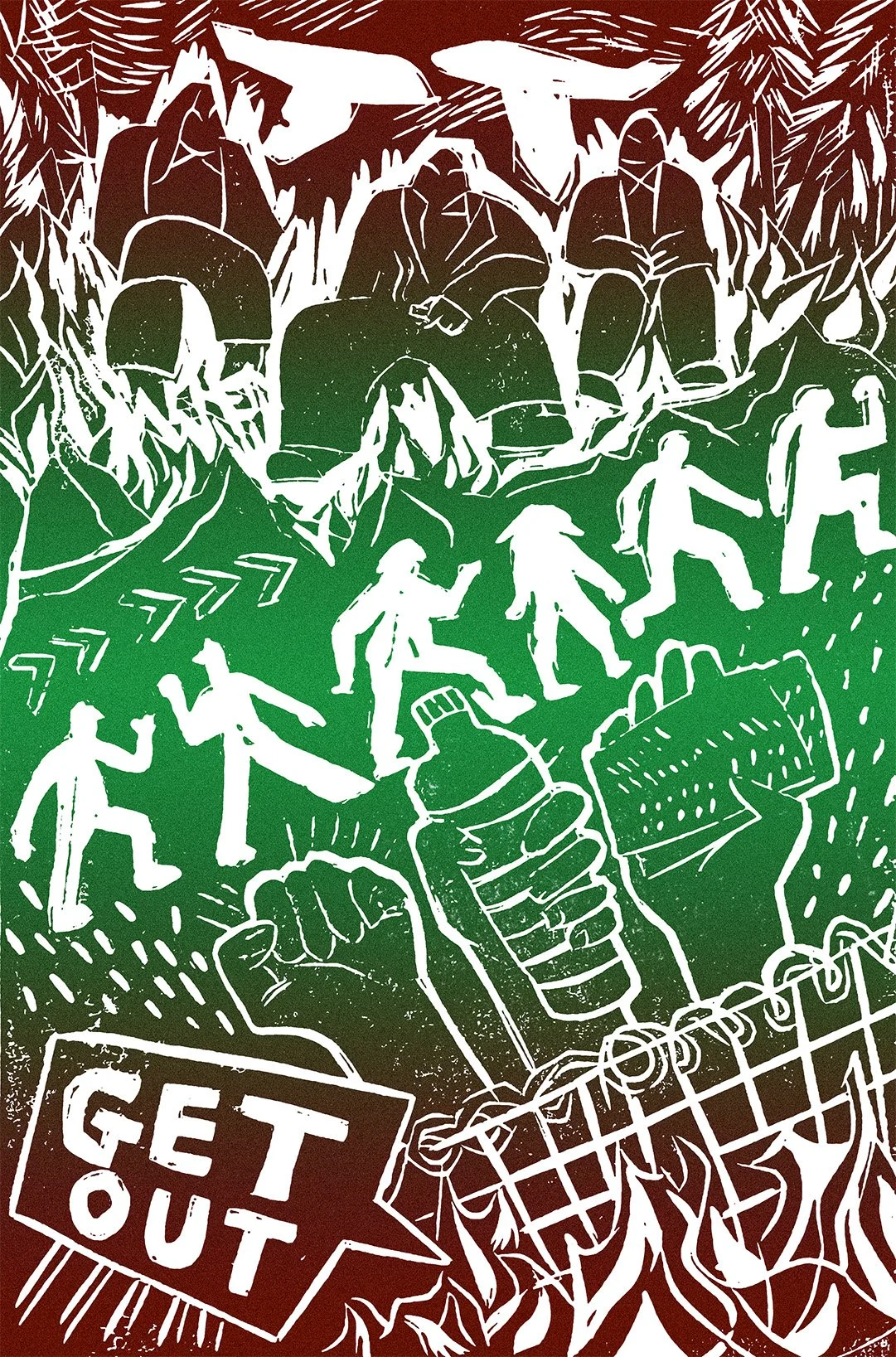
'Get out…get out…get out!' the detainees shouted from their cells in the Tawau Immigration Detention Centre in Sabah, Eastern Malaysia. Undocumented migrant workers from Indonesia and the Philippines had rallied to demand immediate deportation. Not because they wanted to leave the country, but because they could no longer endure the harsh conditions in which they were held in the detention centre. They could only hope that by getting out, their suffering would be alleviated.
A repressive immigration regime
Sabah, a state with an official population of around 3.5 million, relies heavily on undocumented migrant workers from Indonesia and the Philippines. Numbers are estimated at over 1 million, although the government claims a lower figure. Most migrated across porous borders from the 1960s onwards. Using the pretext of security, the government amended the 155 Immigration Act 1959/63 in 2002, allowing it to criminalise irregular migrant workers and people who overstayed visas with penalties of fines, imprisonment, and whipping.
Since then, migrant workers have been haunted by fear. Authorities have undertaken increasingly intense large-scale arrest operations. Government officials have framed migrants as scapegoats for various nationwide problems, which resulted in the first forced deportations to Indonesia and the Philippines in 2002.
The Sovereign Migrant Workers Coalition reports that arrests of undocumented migrant workers are often arbitrary and conducted without access to legal aid. Some migrant workers are asked to plead guilty during trials. After being imprisoned, they are sent to detention centres before being deported to their home countries. Legal instruments are used to create vulnerable and easily exploited workers, with the threat of deportation constantly hanging over their heads.
Hell in Tawau
In 2021, I interviewed former Indonesian detainees at a temporary shelter on Nunukan Island, Indonesia, after they were deported from Sabah. They described the conditions they had been subjected to at the detention centre in Tawau. With around 10 cells, each holding more than 200 detainees, it was highly overcrowded.
'It's cramped. Like sardines', said one deportee. For 24 hours a day, detainees were confined to their cells in dire conditions: minimal sunlight, rough cement floors, and, in some cells, a lack of mats and pillows.
The detainees had difficulty accessing clean water and food sometimes arrived late or was rotten. Toilets were often clogged, and there was a lack of specific provision for women and babies, as well as inadequate health facilities and services. As a result, detainees suffered from scabies, digestive problems, diarrhoea, vitamin deficiencies, and psychological stress. Some detainees had even died.
As one former female detainee told me, ‘For one year and two months inside, I experienced misery. I experienced everything I'd never experienced outside. Perhaps that's why they call it hell on earth. All the suffering was there. Sometimes the water wouldn't run for days. We struggled to bathe, drink, and sleep. Sometimes we were verbally abused if we reported being sick.'
Detention periods range from 5 months to over a year, with no certainty about the date of deportation, despite the agreement between Indonesia and Malaysia stipulating a limit of 4 months. The COVID-19 pandemic was cited as the reason for the delay in 2021, even though the detainees had been tested, and many of the results were negative. With the delay prolonging the suffering of the detainees, a demonstration finally broke out at the centre.
Time for resistance
'We can't stand it here anymore. How long have we been here without being sent home? All we have is scabies. Some have even died in our cells. We're (COVID-19) negative, but tomorrow we'll be positive again because we've been mixed with newly admitted detainees. If we want, we can all protest!'
A former Indonesian detainee who planned the demonstration told me how he and two Filipino detainees coordinated it from their cell. They agreed upon a protest and a hunger strike. Two other detainees wrote letters in Indonesian and Filipino, inviting other cells to join. The letters were smuggled across by detainees who had been tasked with sweeping outside.
At 6 a.m., as usual, officers approached the iron fences surrounding each cell, ordered the detainees to count themselves, and distributed breakfast. The detainees refused.
"Don't do anything stupid! Why won't you eat?" an officer demanded, as a former detainee told me.
One detainee retorted, "We don't want to eat. We want to be deported," shaking the fence, followed by the others. Some used plastic bottles and other available objects to create noise.
The detainees shouted,"Get out…get out…get out!"
"No way. There's no movement, we're in the COVID-19 pandemic!" an officer responded.
A detainee retorted, "Just send us to our country. We'll be quarantined there! Rather than here in these conditions!"
The police then arrived to stop the demonstration, but failed. After it had gone on for approximately 6 hours, the centre authorities finally agreed to the demands. They promised to immediately deport the detainees. Tensions slowly eased, but remained volatile, with detainees beginning to doubt if the promise would be kept. Two weeks later, the Indonesian consulate announced the names of detainees to be deported in stages to Nunukan Island, with subsequent repatriation to their respective regions. The Indonesian and Filipino prison cells were separated after the demonstration. "I think it's to prevent us from joining forces to hold another demonstration like the previous one," said a deportee from the next wave of deportations when I met him on Nunukan Island.
Beyond the walls of Tawau Detention Centre
Five years have now passed since the demonstrations. 23 years have passed since the first mass deportations. I am 26 years old now. I grew up witnessing the immobility of undocumented workers at the border. As an adult, I have not witnessed significant changes in their conditions.
Low wages, raids by authorities, stigmatisation as ‘illegal or haram’ by the state and the media, arbitrary arrests, imprisonment, pain, death: these continue to pervade in Sabah to this day. It's a vicious cycle with no end in sight. Meanwhile, capitalists continue to reap the profits generated by undocumented migrant workers, who are treated as less than human.
Despite this, they are not passive, powerless victims. Under this repressive regime, they have attempted to build alliances of resistance. This didn’t arise solely due to their shared plight in the detention centre; they had been unified as the migrant working class in Sabah long before that.
However, while they had achieved their demands, these alliances were certainly insufficient to drive structural change. Despite the reintegration of Indonesian and Filipino prison cells, there have been no further demonstrations. Organised forces and cross-border nodes of solidarity are needed in order to fight capitalist control and build bridges outside the detention centre walls.