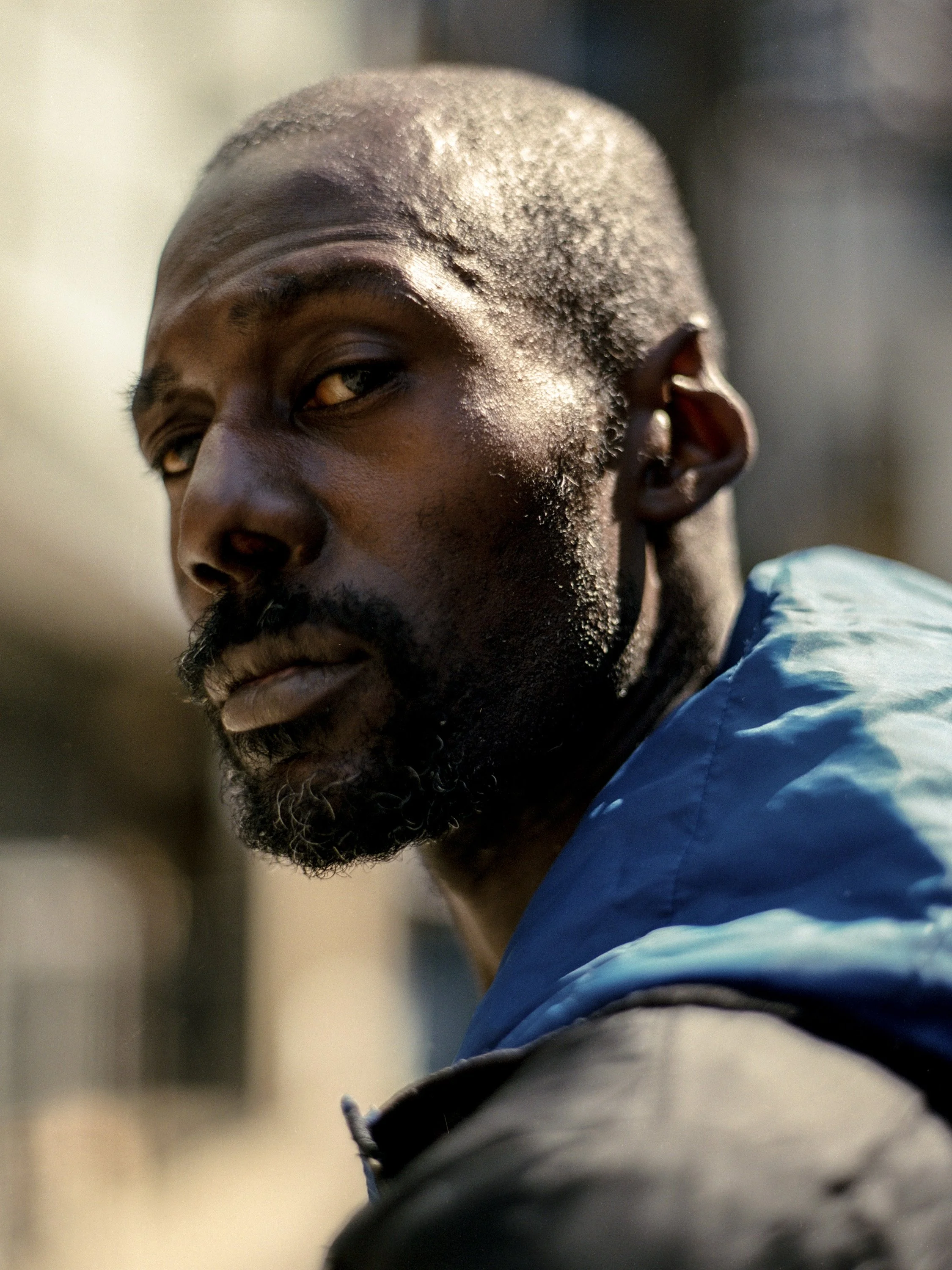
Rojava: The Women’s Revolution That Refuses to Disappear.
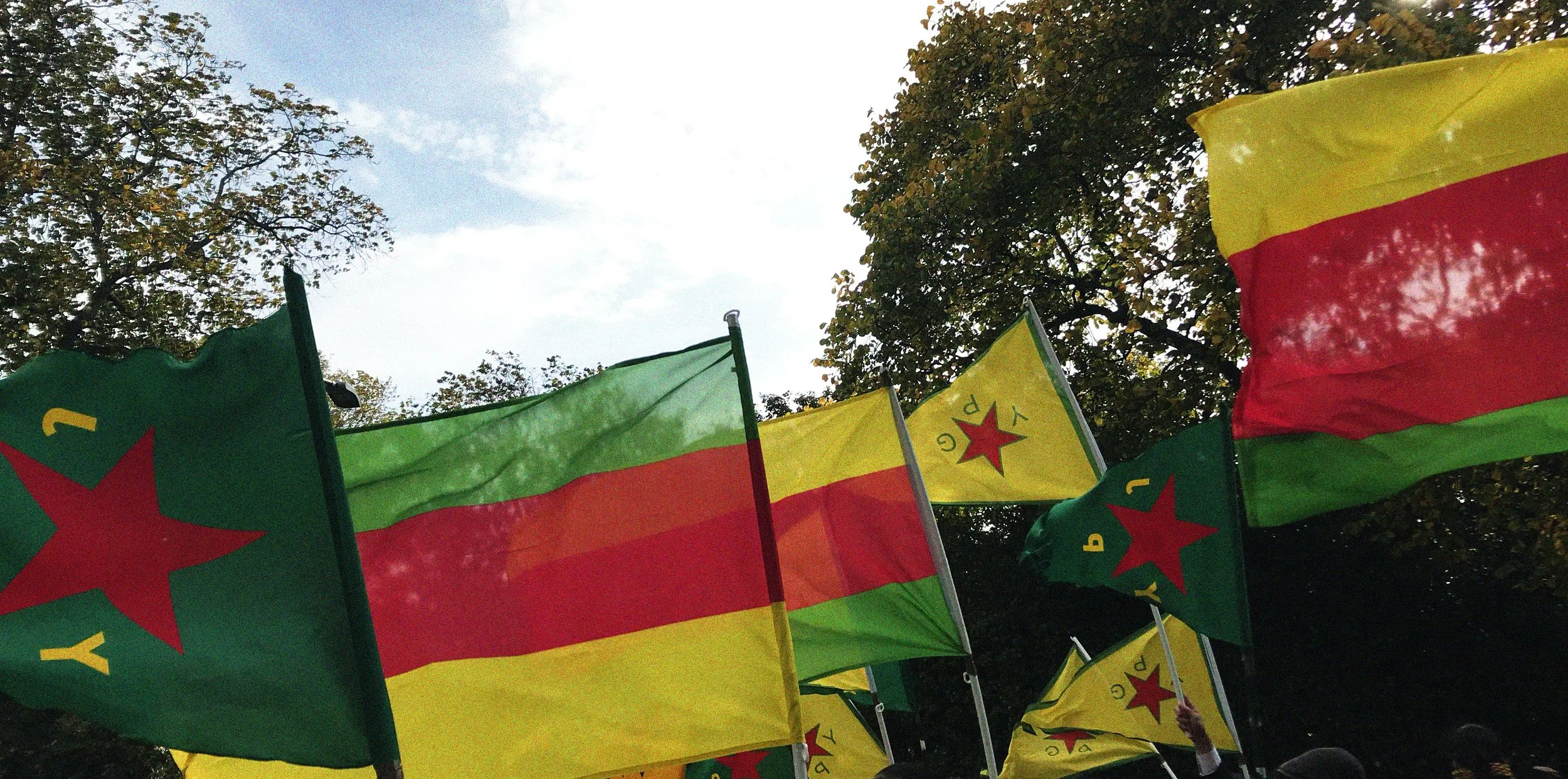
In 2014, the small Kurdish-majority town of Kobanê near the Syria-Turkey border became the focus of global attention. Surrounded by ISIS and expected to fall, Kobanê resisted, survived, and inspired one of the most radical democratic experiments of our time. During the siege, I was translating Hemingway’s The Old Man at the Bridge and imagined the story set along the ancient Euphrates River, near some of the world’s oldest settlements. Hemingway’s Old Man fled the Spanish Civil War, leaving behind his animals, his home, and his life. Nearly eighty years later, in Kobanê, the Old Man was Kurdish. He left his goats, cats, pigeons, olive trees, and a home built over generations. The bridge in Spain became a river crossing in northern Syria; history had changed its language, but the fear and the loss remained the same.

Housing ourselves and others. 50 years of the Advisory Service for Squatters.
Last October, the Advisory Service for Squatters celebrated its 50th anniversary, though squatting has been around much longer. In October 2024, we published the 15th edition of the famous Squatters Handbook, which had to be more detailed and complex than earlier editions.
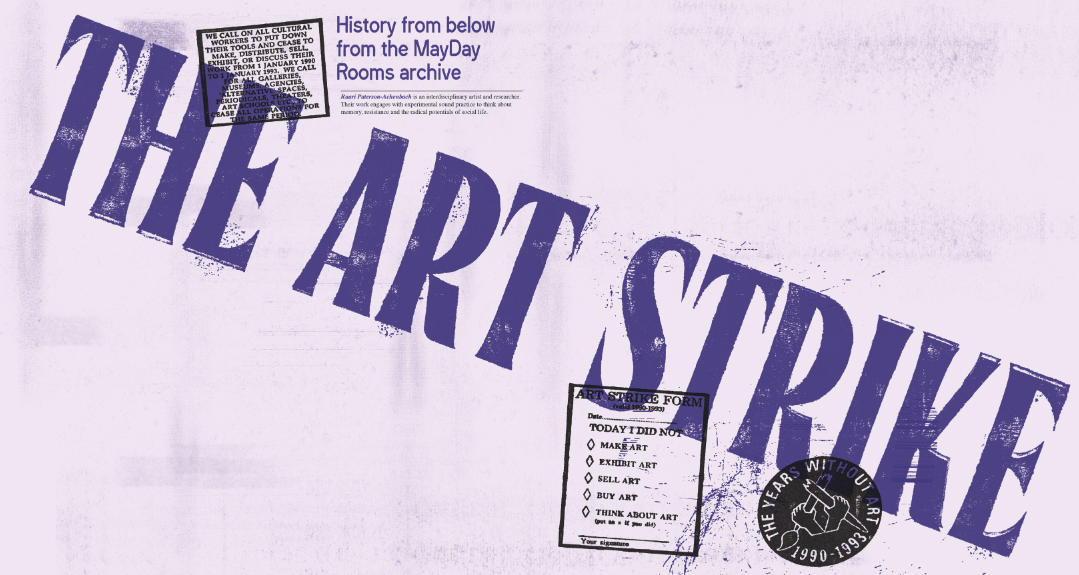
The art strike
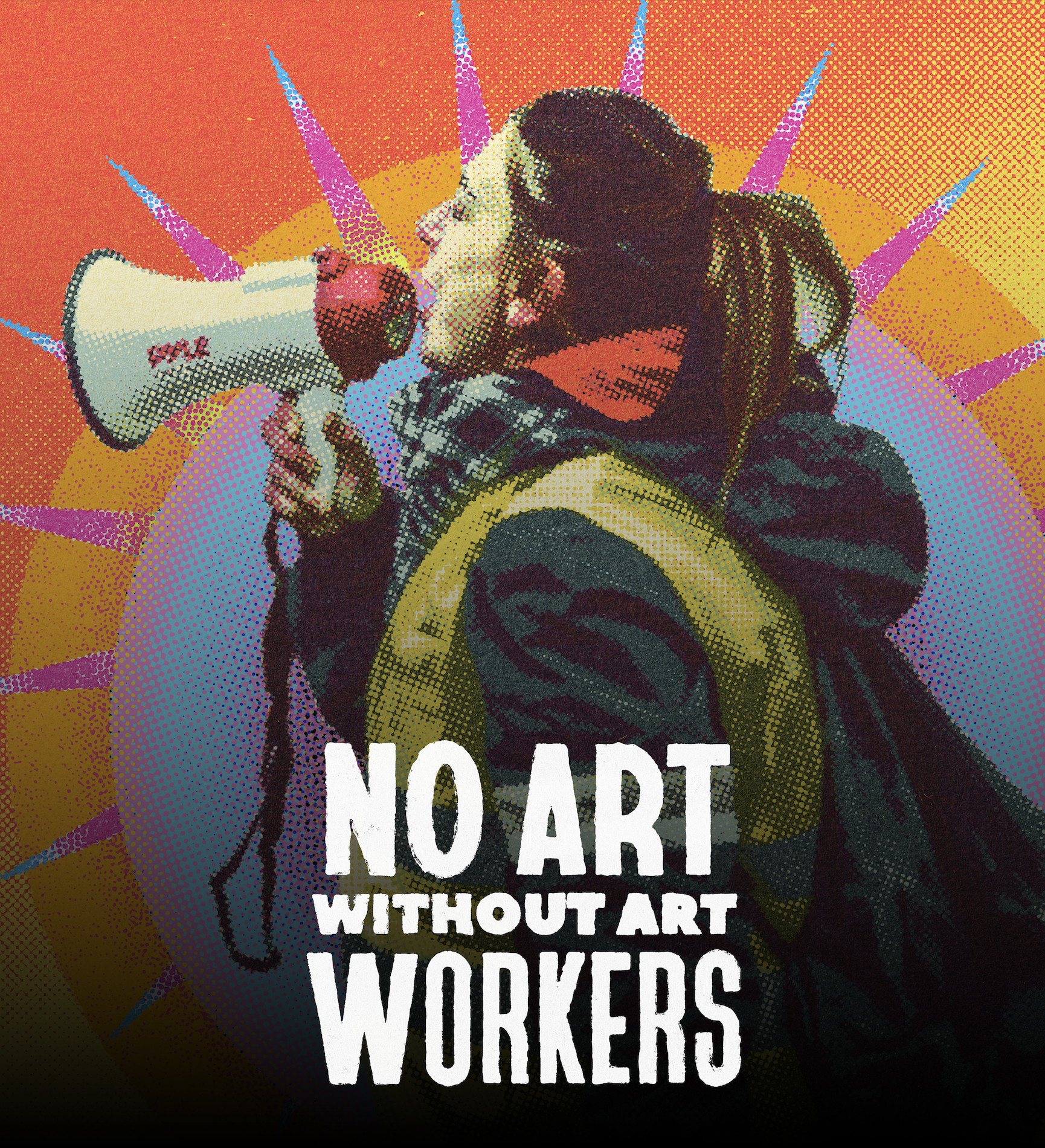
‘We call on all cultural workers to put down their tools and cease to make, distribute, sell, exhibit, or discuss their work from January 1st 1990, to January 1st 1993'. So begins the Art Strike Handbook, published in 1989, with the hopes of initiating an international cessation of artistic labour. Organisations were formed, banners and badges were made, and pickets were organised. The goal wasn't just to shut down the art world, but threaten the very notion of art itself.
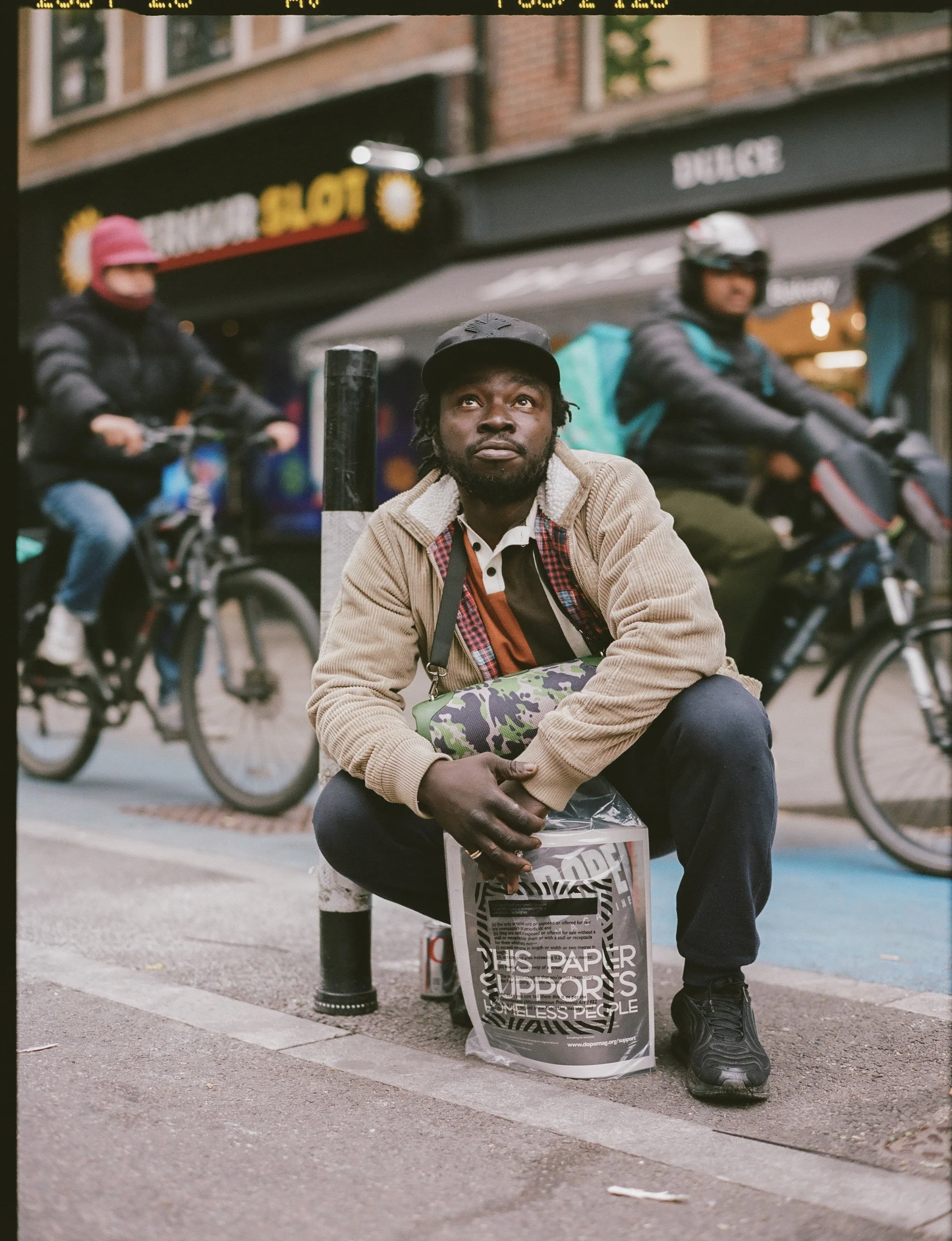
George aka “Boxer”
How did you get started selling the magazine?
It was a recommendation. Since I became homeless, at first I was just being moved from one place to another, hostel to hostel, but mainly sleeping on the street. It wasn't until the 2024 Crisis at Christmas that I got really stuck into selling the magazines. I wasn't taking it too seriously at first, but, yeah, I started from then.
Signs of Rebellion
As we write, the world is on fire. Trump threatens Greenland and Venezuela, Iranians are being killed for protesting against their regime and the Gaza genocide continues. Climate breakdown is quickly entering a critical period. There is a desperate need to shift towards peace and reconstruction, and ideas for how to do so without relying on the state, government, or political parties are becoming increasingly popular. But those ideas are not equally accessible for all. As deaf people who use British Sign Language (BSL) as our first language, we face barriers that prevent us from participating in these discourses of resistance.
Shoplifting & Class Struggle
On the evening of 15 December 2025, just before 9:40 PM, a large group of people dressed as Santa Claus and his elves went into a supermarket in Montreal. They moved calmly through the supermarket aisles, filling their sacks with food. Within minutes they left taking thousands of dollars' worth of groceries, none of which was paid for. Santa and his masked elves then went to the Christmas tree in the central square. Underneath the twinkling lights, they laid out the stolen food and attached signs that read ‘Christmas is expensive, free food’. The remaining groceries were distributed to community fridges across Montreal.
The middle class and revolution.
Class is a touchy subject. It’s a lens we use to judge others and ourselves. Over the last 50 years, categories of class have become increasingly blurred by neoliberalism, despite Victorian-era poverty making a comeback. We are forever sold the dream of social mobility, but these days, most of the ‘socially mobile’ are hurtling downwards. Austerity has played a part in this. Families and friendship networks have been financially and energetically trying to care for those around us after years of health and social services being defunded, a burden that left many of us unable to accumulate our own personal safety nets. Many of us have had to move to big cities for work, and the precarity of the housing crisis has been another boot on our necks. At the same time, we watch through black mirrors those with more money than we have ‘living their best life’ on social media, taunting us with pleasures we will never be able to afford.
Another way to live: Inside the fight for Prosfygika
Surrounded on either side by the police headquarters of Athens and the supreme court – two pillars of state power – the eight housing blocks that make up the squatted community of Prosfygika stand proud and unflinching – and always threatened. The neighbourhood is marked by a long history, both as a haven for refugees in Athens since the 1930s (Prosfygika means 'refugee homes' in Greek) and as a stronghold of partisan resistance in the December 1944 uprising, which left the blocks scarred by bullet holes. Today, the neighbourhood plays a key role in the fight against the ongoing state-backed gentrification of Athens.
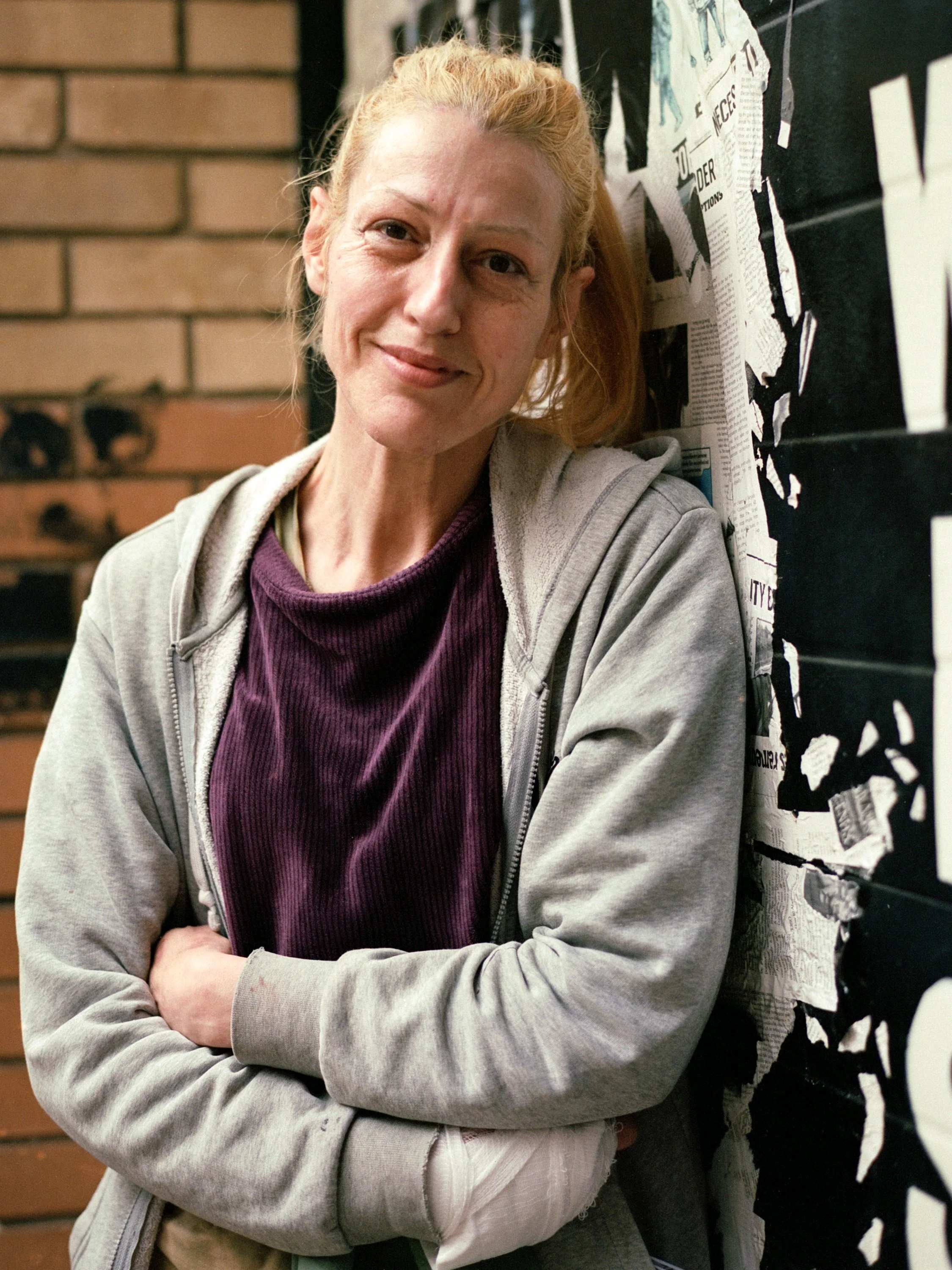
Vendor interview: Cardiff
How did you get involved in selling the magazine?
Well, I was literally sleeping rough, and one of my friends, Claire, was doing the magazine and told me it was a good idea for me to make money to get into shelters and get interested in charity work. And I've always done charity work in Cardiff, where I used to work, and I’ve helped people in youth clubs and the Prince's Trust, where I met the Queen's husband…
Communes or cooperatives
Traditional capitalist businesses are dictatorships. Small groups of managers and shareholders make all decisions, and reap most of the profits. In contrast, a workers’ cooperative is a business where the employees own and control everything. Workers are members, which means they have an equal say in decision-making and decide how profits are invested.
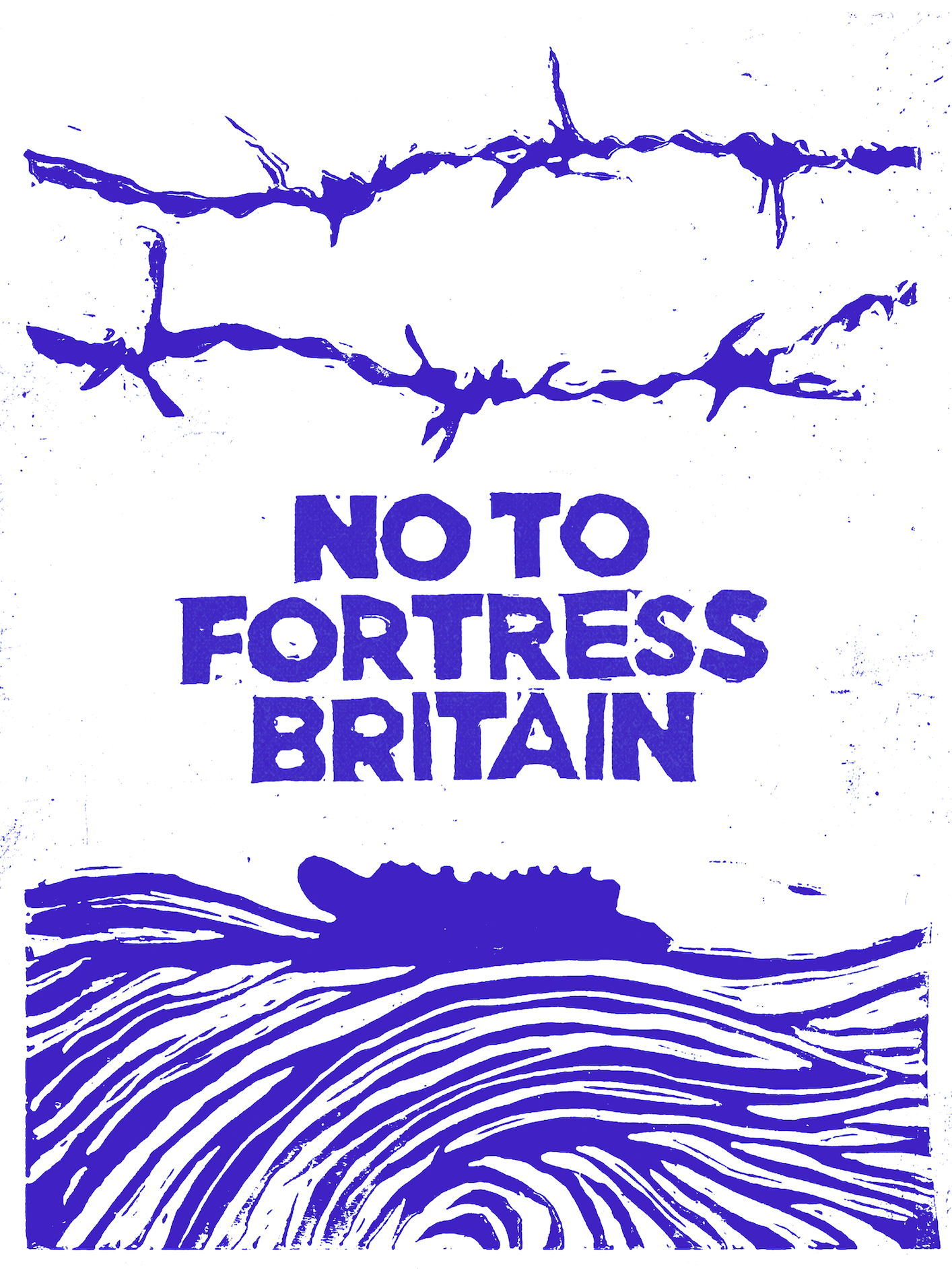
Hotels, hostels, and history: Migrants under attack in britain.
The movement of people is as old as humanity. Countries are fundamentally invented shared myths; borders, immigration controls and passports are just a blip in history. For most of human existence, movement was free if you could afford it - although money to move was another problem. People flee war, starvation, and seek better economic prospects in other countries. This is especially true of people coming to the UK, where its rulers have historically looted the world's wealth, resulting in improved living conditions relative to the rest of the world. And these same elites continue to sponsor global war, genocide and invasion, increasing the need for people to flee their homes.
Global Ecology not global Economy
In January 1997, Friends of the Earth called a rally at the construction site of the Newbury Bypass. The plan was for a candlelit vigil, followed by speeches, and then a march to the building site to tie ribbons and messages to the fence. The event was billed as a one-year anniversary reunion for all the activists and campaigners who had spent the previous winter occupying tree houses, dodging vast armies of security guards, attaching themselves to barrels full of concrete and using many other inventive tactics in an attempt to slow or stop the felling of more than 10,000 trees to make way for the construction of the road. The eviction of over 30 different treehouse camps along the route of the planned bypass from January to March of 1996 had become a national cause celebre, attracting thousands of activists in freezing conditions to try and stop the clearances.
Healing Justice
Inequality is harmful. People who are discriminated against experience physical, emotional and social effects, which worsen their long-term health and well-being. These are collective traumas. Suffering is experienced in similar ways across communities and social groups living with historical oppression or the injustice of capitalism. One-to-one therapy cannot treat these collective wounds. It is inaccessible for many due to cost, but crucially, individual treatment makes healing a personal responsibility without tackling the social and political sources.
Questioning Authority through play
The Woodcraft Folk is a cooperative youth movement. It was originally established in the 1920s by young people who wanted to create an organisation that facilitated a relationship between children and nature whilst rejecting much of the hierarchy and nationalism of other youth movements at the time. In opposition to the authoritarian tendencies of the Scouts, the Woodcraft Folk aims at more horizontal structures. When the Woodcraft Folk started, children were generally expected to refer to their teachers and guardians by the titles 'Sir' and 'Miss'. However, at Woodcraft, these formalities were avoided. New names and titles were given to both young people and adult volunteers, linguistically signalling an aspiration, if not always a reality, of engaging with one another on more equal terms.
The American Dream
There’s little charm in the current US administration’s version of the American Dream. Look at the original model. Not even its populariser, the financier-cum-historian James Truslow Adams, tied it exclusively to wealth-creation and the accumulation of power. In his version, while the Dream included the promise of cars and high wages, it was underpinned by a Protestant ethic of hard work and a notion of individual flourishing. Adams pictured a people unrestrained by the old world’s fusty ways and class biases, pursuing their happiness by the exploitation of the country’s seemingly inexhaustible natural resources. Enrichment, born of industrialisation, was the Dream’s driver. Liberty and equality were its end.
The wrong kind of climate action: What if net zero is making it worse?
Just in the last 24 hours of writing this article storms have smashed both New Zealand and the east coast of Australia, while in Jamaica, government officials warned that as Hurricane Melissa intensified into a Category 5 storm, many impacted communities ‘will not survive the flooding’, and that no community in the Jamaican capital Kingston is safe.
The speed with which the hurricane intensified is no longer shocking. Scarcely a day goes by without multiple news stories covering the increasingly catastrophic impacts of climate change.
Onward to the Black Revolution!
Lorenzo Kom'boa Ervin is an American writer, activist and black anarchist. He is a former member of SNCC, the Black Panther Party and Concerned Citizens for Justice. Following an attempt to frame him on weapons charges and for threatening the life of a Ku Klux Klan leader, Ervin hijacked a plane to Cuba in February 1969. While in Cuba, and later Czechoslovakia, Ervin grew disillusioned with the authoritarianism of state socialism. Captured by the CIA in Eastern Europe, he was extradited to the US, put on trial and sentenced to life in prison in 1970. He was introduced to anarchism whilst in prison, inspiring him to write Anarchism and the Black Revolution in 1979. Released after 15 years, Ervin remains politically active.
Vendor interview: Captain
So I was really lucky, it was my 30th birthday, now I’m 38. Two days later, this guy was unloading the van (of DOPE magazine). And he said “you know what guys, you guys might like this, this is cool stuff, this is DOPE, man. And we’re just giving it out to people so they could just earn something.” For free like, you know and get by. He was so kind, one of the kindest people. We helped him unload some stuff, and then he was like “Hey guys, look, I’m okay. I got other guys to help me out here take it in, so just take some”.
Disarming the war state
In the cockpit of the Hawk Jet lay a number of unusual objects: a VHS tape, an A4 pamphlet, and a calling card with the names of four women - Andrea Needham, Joanna Wilson, Lotta Kronlid, and Angie Zelter - under "Seeds of Hope: East Timor Ploughshares" and the words "Women Disarming for Life and Justice”. The control panel of the jet had been smashed by a single blow from a hammer.
INSIDE THE NITAZENES CRISIS
For the past two years, the UK has been in the midst of an invisible health crisis caused by nitazenes, a group of powerful synthetic opioids which can be up to 500 times stronger than heroin and ten times stronger than fentanyl.